Linux on the desktop is evolving and immutable Linux is at the center of that transformation. for years, traditional Linux distributions have followed a familiar model: install packages, modify system files, update frequently, and occasionally fix what breaks. But what if your operating system was designed to be stable, reproducible, and resistant to system corruption by default?
That’s exactly the promise of immutable Linux.
In simple terms, an immutable Linux system keeps the core operating system read-only. Instead of modifying the base system directly, updates are delivered as complete, atomic images. If something goes wrong, you can roll back instantly. dramatically improves system reliability, security, and consistency making it especially appealing for developers, power users, and anyone tired of unexpected breakage after updates.
Two of the most exciting desktop implementations of this model are Fedora Silverblue and openSUSE Aeon. Both distributions reimagine how Linux should work on modern desktops. Instead of traditional package management workflows, they rely on image-based updates, containerized applications, and technologies like Flatpak and container tooling to keep your system clean and predictable.
But immutable doesn’t mean inflexible.
With tools like toolbox containers and transactional updates, these systems give you the freedom to experiment without risking your base OS. Want to test development environments? Spin up a container. Broke something? Roll back with a reboot. The separation between the core system and user applications creates a safer, more maintainable Linux experience.
As more users demand stability, security, and cloud-native workflows, immutable Linux is quickly moving from niche concept to mainstream reality. Whether you’re a developer looking for a reproducible workstation, a sysadmin who values reliability, or a Linux enthusiast curious about the future of desktop computing, understanding Fedora Silverblue and openSUSE Aeon is essential.
What Is Immutable Linux? A Deep Dive into Fedora Silverblue and openSUSE Aeon

Immutable Linux is not a marketing term. It is a fundamental redesign of how a Linux operating system is structured, updated, and maintained. Traditional Linux distributions allow full read-write access to the system’s root filesystem. Immutable Linux, on the other hand, locks the base operating system so that it cannot be modified during normal use.
Two of the most prominent desktop implementations of this model are Fedora Project’s Fedora Silverblue and openSUSE Project’s openSUSE Aeon.
These systems are not experimental side projects. They represent a broader shift in Linux toward atomic updates, containerized applications, and predictable system states.
What Does “Immutable” Actually Mean?
In an immutable Linux system.
- The root filesystem (
/usr) is mounted as read-only. - Core system components cannot be altered by package managers in the traditional way.
- Updates are delivered as complete images rather than individual package changes.
- You can roll back to a previous system version instantly.
This design significantly reduces.
- System corruption from broken package dependencies
- Configuration drift over time
- Risks caused by partial updates
The Technology Behind Immutability
OSTree
Both Fedora Silverblue and openSUSE Aeon rely on OSTree, a version-controlled filesystem for operating system trees. Think of it as Git, but for your OS.
Instead of updating hundreds of RPM packages individually, the system deploys a complete, tested filesystem snapshot. If something goes wrong, you can boot into the previous snapshot.
Atomic Updates
Atomic updates ensure that system upgrades either fully succeed or do not apply at all. There is no “half-upgraded” broken system state.
This model is inspired by container technologies and cloud-native infrastructure practices.
Understanding Immutable Linux Through Fedora Silverblue and openSUSE Aeon
To understand immutable Linux fully, it’s helpful to examine how Fedora Silverblue and openSUSE Aeon implement the concept differently. Linux isn’t standing still it’s evolving. One of the biggest shifts in recent years is the move toward immutable Linux, a model where the core operating system stays locked and protected from everyday changes. Instead of constantly modifying system files, updates are applied atomically, making the system more stable, secure,and easy to roll back if something goes wrong.
Two desktop distributions leading this change are Fedora Silverblue and openSUSE Aeon. Both rethink how Linux should work on modern machines separating the base system from apps and development tools to create a cleaner, more reliable experience.
Fedora Silverblue Architecture
Fedora Silverblue is an immutable variant of Fedora Workstation.
It uses
- rpm-ostree for system image management
- Flatpak for desktop applications
- Toolbox for development environments
rpm-ostree Explained
Instead of dnf upgrade, Silverblue uses.
rpm-ostree upgradeThis pulls a new system image and stages it for the next reboot.
To check deployments.
rpm-ostree statusTo roll back.
rpm-ostree rollbackThis creates a predictable system lifecycle that reduces update-related failures.
Layered Packages
Although immutable, Silverblue allows layering additional RPM packages.
rpm-ostree install vimHowever, heavy layering is discouraged in favor of container-based workflows.
openSUSE Aeon Architecture
openSUSE Aeon is based on openSUSE MicroOS. It follows similar atomic principles but uses different tooling.
Transactional Updates
Aeon uses transactional-update.
sudo transactional-update dupChanges are applied to a new snapshot and activated after reboot.
Btrfs and Snapper Integration
Aeon leverages.
- Btrfs filesystem
- Snapper for snapshot management
You can view snapshots using.
sudo snapper listThis deep integration with Btrfs allows highly reliable rollback functionality.
Immutable Linux: How Fedora Silverblue and openSUSE Aeon Are Changing the Desktop
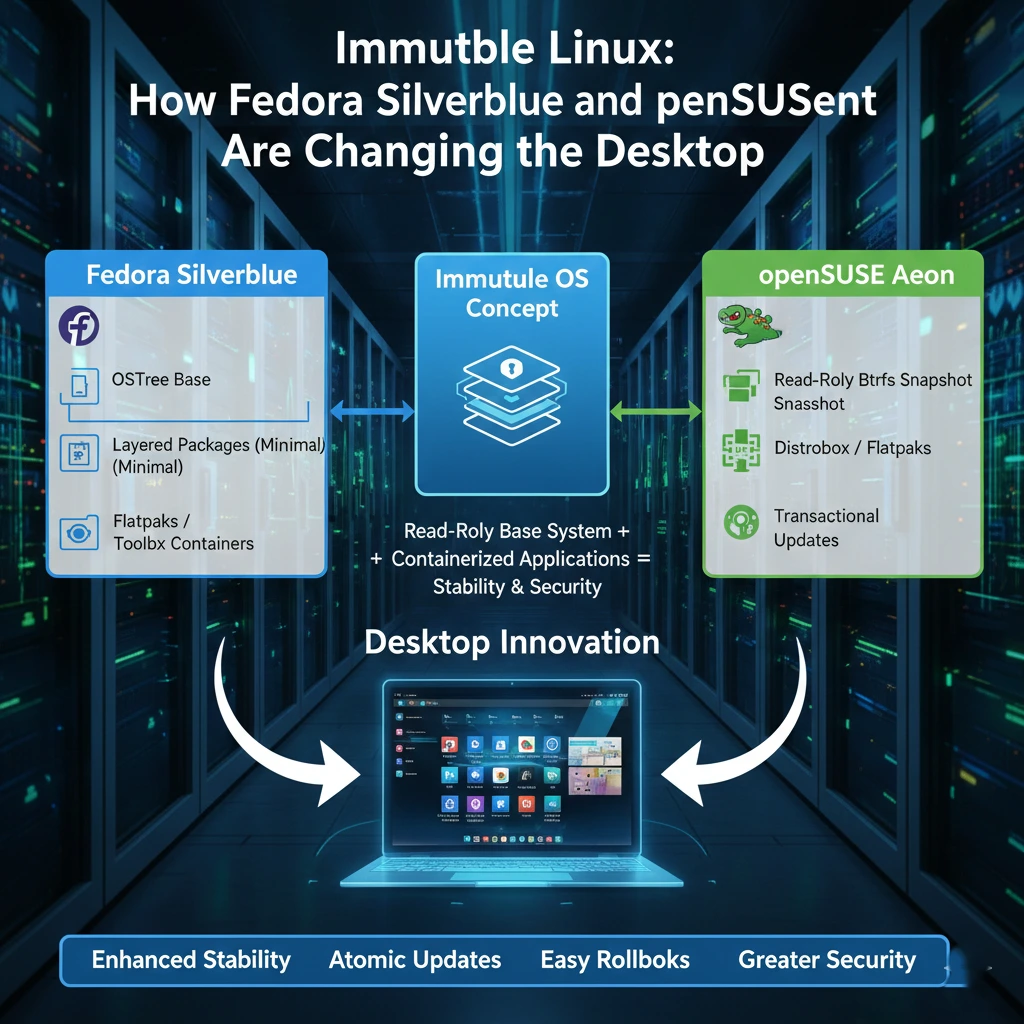
Immutable Linux changes how users interact with their systems. The Linux desktop is entering a new era one built on stability, security, and predictability. Immutable Linux challenges the traditional model of constantly modifying system files by locking the core operating system and delivering updates as complete, atomic snapshots. The result? Fewer breakages, safer updates, and a system that’s easier to maintain over time.
Distributions like Fedora Silverblue and openSUSE Aeon are leading this shift. By separating the base OS from applications and encouraging containerized workflows, they offer a modern desktop experience designed for developers, creators, and everyday users who value reliability.
1. Application Management Through Flatpak
Both Silverblue and Aeon emphasize Flatpak applications.
Flatpak applications.
- Run in sandboxed environments
- Are distributed independently of the base OS
- Reduce dependency conflicts
Example.
flatpak install flathub org.mozilla.firefoxThis keeps system and applications cleanly separated.
2. Reduced System Breakage
Traditional Linux issues often stem from.
- Dependency conflicts
- Manual configuration edits
- Interrupted updates
Immutable systems reduce these problems because.
- System files are protected
- Updates are tested as full images
- Rollbacks are immediate
3. Development Workflow Shift
Silverblue encourages development inside containers using Toolbox
toolbox create
toolbox enter
This separates development tools from the base system.
The Rise of Immutable Linux: Exploring Fedora Silverblue and openSUSE Aeon
Immutable Linux is not isolated to desktops. A quiet revolution is happening in the Linux world. Immutable Linux once a concept mostly associated with servers and containerized infrastructure is now making its way to the desktop. The idea is simple but powerful: keep the core operating system read-only, deliver updates atomically, and make rollbacks effortless. The result is a system that feels more stable, predictable, and resilient.
Leading this movement on the desktop are Fedora Silverblue and openSUSE Aeon. Both distributions embrace image-based updates and container-focused workflows, offering a fresh approach to how Linux should be built and maintained.
It is influenced
- Containerization trends
- Cloud-native infrastructure
- Kubernetes-based deployment models
The philosophy mirrors how modern infrastructure operates: immutable infrastructure over mutable servers.
Industry Context
Container platforms like Kubernetes rely on immutable container images. Immutable Linux desktops apply the same concept locally.
This alignment improves
- Security consistency
- Deployment reliability
- Developer experience parity
Why Desktop Linux Is Moving This Way
Desktop users demand
- Fewer system breakages
- Stable upgrade paths
- Predictable long-term behavior
Immutable systems provide these guarantees.
A Complete Guide to Immutable Linux with Fedora Silverblue and openSUSE Aeon
This section focuses on practical use. Immutable Linux is transforming the way we use and maintain desktop systems. the core operating system read-only and applying updates as complete, atomic snapshots, it ensures greater stability, security, and reliability a major shift from traditional Linux workflows.
Two desktop distributions leading this approach are Fedora Silverblue and openSUSE Aeon. They combine image-based updates, containerized applications, and rollback capabilities to provide a modern, worry-free Linux experience.
Installation Considerations
Both systems provide ISO images similar to traditional distributions, but post-install behavior differs.
After installation
- Applications should be installed via Flatpak
- System modifications should be minimal
- Development tools should run inside containers
System Updates
Fedora Silverblue
rpm-ostree upgradeReboot required.
openSUSE Aeon
sudo transactional-update dup
reboot
Rollback Mechanisms
Silverblue Rollback
rpm-ostree rollbackReboot and previous deployment becomes active.
Aeon Snapshot Rollback
sudo snapper rollback <snapshot-number>When to Layer Packages (And When Not To)
Layering is acceptable
- Drivers not available via Flatpak
- Core utilities
Avoid layering
- Large development stacks
- Frequent experimental packages
Use containers instead.
Immutable Linux for Modern Desktops: Fedora Silverblue and openSUSE Aeon Explained
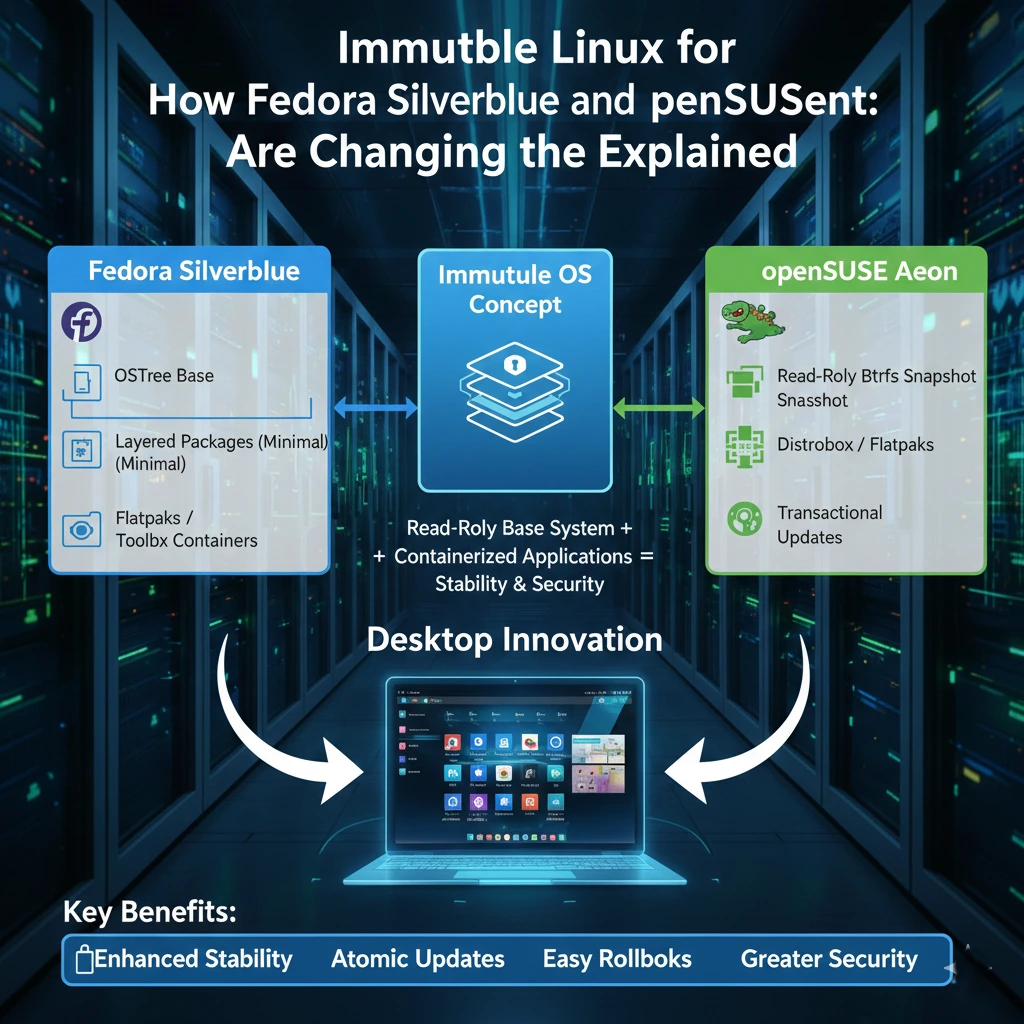
Immutable Linux aligns with modern computing trends. The Linux desktop is evolving, and immutable Linux is at the forefront of this change. core system read-only and applying updates as atomic snapshots, immutable distributions offer unmatched stability, security, and reliability compared to traditional Linux setups.
Leading this shift are Fedora Silverblue and openSUSE Aeon. Both focus on separating the base OS from applications, using containerized workflows and rollback features to create a safer, more predictable desktop experience.
Security Benefits
- Read-only system partitions
- Reduced attack surface
- Easier integrity verification
If malware attempts to modify /usr, it fails.
Predictable State Management
Every reboot leads to a known deployment. There is no silent drift.
Ideal Use Cases
- Developers
- Security-focused users
- Organizations deploying managed desktops
- Users tired of dependency breakage
Why Immutable Linux Matters: Fedora Silverblue and openSUSE Aeon Overview
Immutable Linux represents a philosophical shift. Linux is changing, and immutable Linux is quickly becoming a key part of its future. By keeping the core operating system read-only and applying updates as complete snapshots, immutable systems offer greater stability, security, and reliability reducing the risk of broken updates or system corruption.
Distributions like Fedora Silverblue and openSUSE Aeon are leading the way on modern desktops. With containerized applications, rollback capabilities, and image-based updates, they provide a safer, more predictable Linux experience.
Instead of
“Customize the system heavily and maintain it manually”
It promotes
“Keep the base system minimal and stable; isolate everything else”
This separation improves
- Stability
- Security
- Upgrade reliability
It does not eliminate flexibility – it restructures it.
Conclusion
Immutable Linux is not about restricting users. It is about protecting system integrity while modernizing Linux architecture.
Fedora Silverblue and openSUSE Aeon demonstrate that atomic updates, containerized applications, and rollback-based system management are practical for everyday desktops.
As container-first computing becomes standard, immutable Linux is likely to become more common across distributions.
For users who value stability without sacrificing control, immutable Linux offers a technically sound and forward-looking solution.